

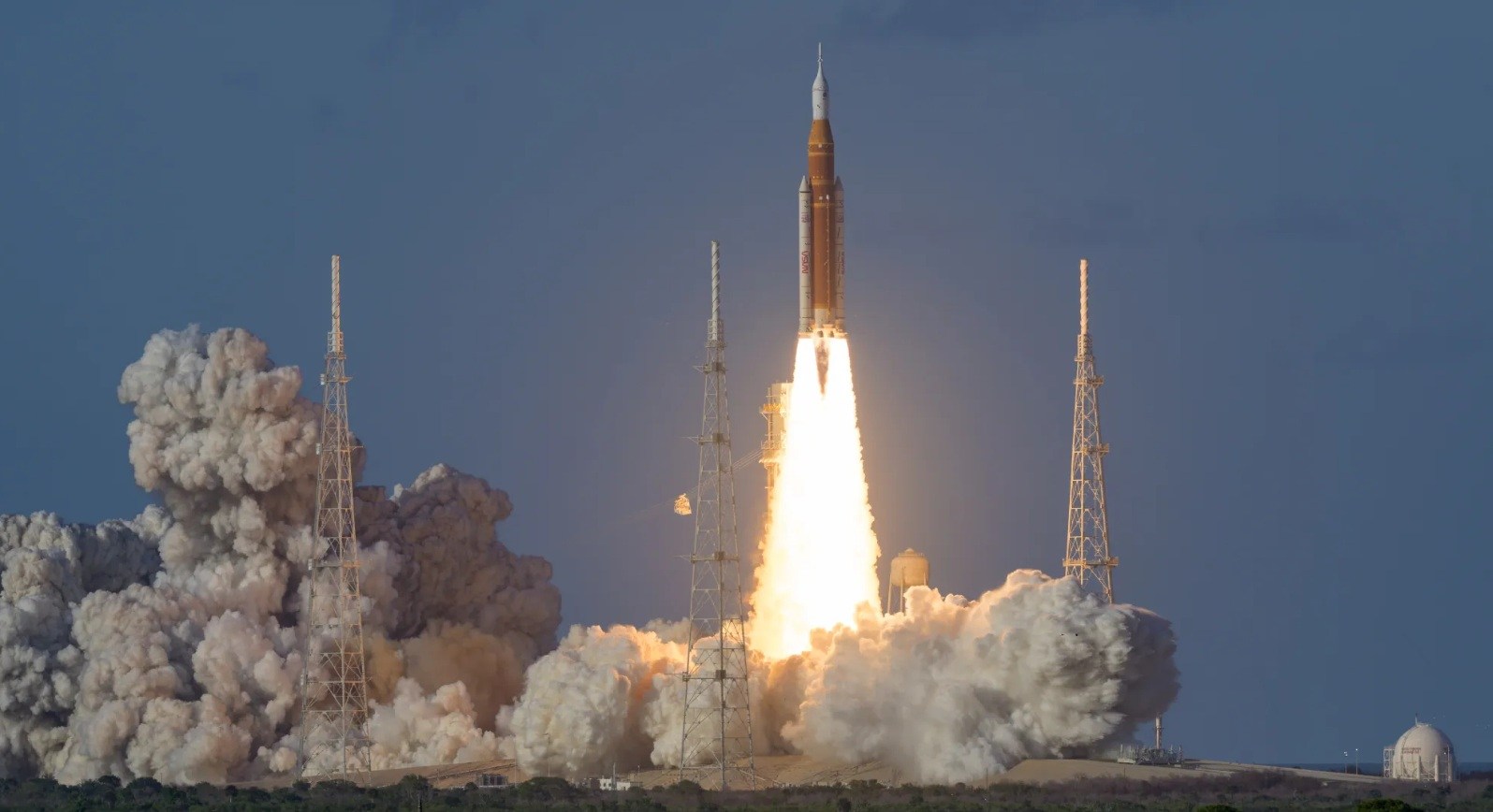
The last time humans went to the moon in April 1972, All in the Family was the number one show on television, Richard Nixon was president and Roberta Flack’s ballad, “The First Time Ever I Saw Your Face” was in the number one spot of the Billboard Hot 100.
Fifty-four years later, Artemis II carried NASA astronauts and Canadian Space Agency mission specialist Jeremy Hansen onboard. Launching April 1 from NASA’s Kennedy Space Center, the journey took 10 days but as author John Larsen found out, it took Hansen years to prepare.
TBS: What drew you to this project?
JL: There were two things. First, I wanted to help tell Canada’s story and highlight the country’s role in space exploration. Canadians have made significant contributions to space programs since the early days, but we don’t always tell those stories. Second, I was drawn to Jeremy Hansen himself. He’s someone readers can relate to, and his journey offered an opportunity to tell a compelling story about achievement, perseverance and purpose.
TBS: Why did you want to write this book with Jeremy Hansen?
JL: Jeremy is the real deal. I saw him under tremendous pressure and stress, and he remained exactly the same person throughout. He has a remarkable steadiness and character. It’s rare to meet someone with that kind of bearing and resilience.
TBS: What surprised you most while researching the book?
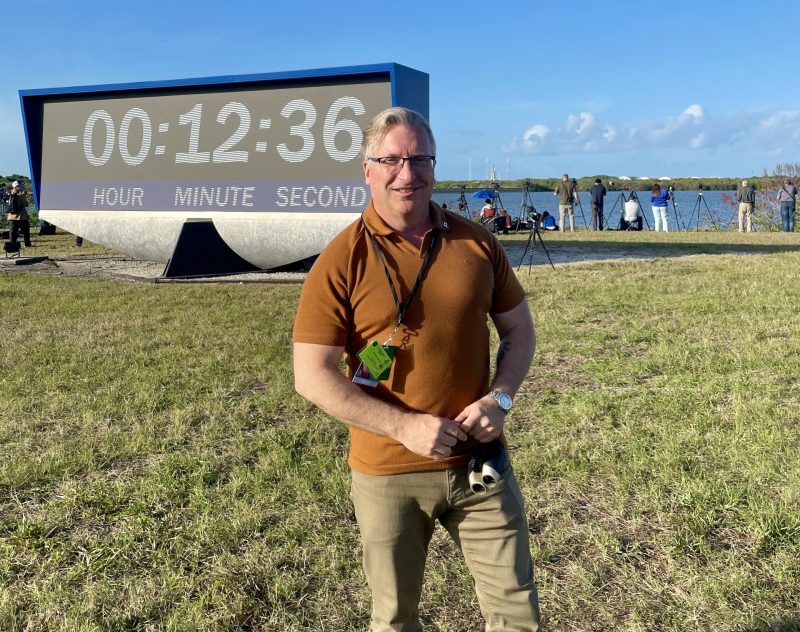
JL: The intensity of the training. Most people have no idea what astronauts go through. This was the first time in 50 years that humans were preparing to return to the moon, and many of the procedures were being developed in real time. The physical, technical and mental demands were extraordinary.
Author John Larsen and Astronaut Jeremy Hansen’s new book, Earthrise: A Canadian Astronaut’s Journey Into Deep Space, takes readers inside the Artemis II mission to the moon and chronicles Hansen’s journey to prepare. A tale of courage and perseverance, it explores Canada’s place in space. Here’s an excerpt from Earthrise: A Canadian Astronaut’s Journey Into Deep Space, just published by HarperCollins.
On Friday, April 10, our last day in space, we woke up to the song “Run to the Water” by one of my favourite bands, Live. Before the mission, I’d suggested it as our wake-up song for re-entry day. I liked how the lyrics would reflect our return to Earth, when we’d be travelling at nearly thirty-nine times the speed of sound.
Our daily check-in with Mission Control confirmed that everything was going according to plan. We were on an ideal trajectory for re-entry, and below us, the weather was perfect. Everything was trending in the right direction, but nobody was taking anything for granted. The risks were still real, and there was no margin for error. Integrity’s entry-interface angle needed to be bang-on, within one-half of a degree of the planned entry trajectory. If not, we would either bounce off the atmosphere and be shot back into deep space, or we’d plummet through the atmosphere at the wrong angle and burn up. For thirteen minutes, everything had to go right.
A couple of hours before re-entry, we began suiting up. It wasn’t anything like our suit-up for launch. No technicians, no comfy chairs, no easy banter. We all helped each other, doing up zippers, checking seals, and confirming pressures.
“Houston, Integrity,” Reid said. “Cabin configured. All crew suited and seated.”
That was it. We were ready.
Meanwhile, far below us, the USS John P. Murtha moved ever closer to our expected splashdown zone. We were due to hit the water just after 8:00 p.m., and about fifty minutes before that, we transitioned from the Deep Space Network back to the Tracking and Data Relay Satellite communications system.
The call came to separate from the European Service Module. It had held everything we needed to survive in space. It was a surprisingly emotional moment; the module had been our lifeline for the past nine days. Now, Mission Control was going to release it, allowing it to tumble behind us into the bonfires of the Earth’s protective layer. I knew this moment would come, but somehow it was still oddly sad, like saying a final farewell to a good friend.
At 7:33 p.m., it was released.
We had reconfigured the capsule and were now sitting back in our seats, so close to the floor that we could hear the loud bang of explosive bolts as the module was set free. The release was more aggressive and louder than I had expected. We heard a solid thud before the module floated away as elegantly as it had served us.
Immediately after jettisoning the European Service Module, and exactly half an hour before we were due to splashdown, Mission Control initiated the crew module raise burn. It slightly shallowed our entry trajectory to put us right in the sweet spot while also providing some added distance from the service module, as we’d be hitting the atmosphere in near succession. It, too, went flawlessly.
I tightened my straps; it was time for the fireworks.
We slammed into the Earth’s atmosphere at 7:53 p.m., thundering down at over 10 kilometres per second. Per second. The thrusters fired almost constantly to stabilize the capsule: loud thuds, as if Thor himself were hammering on our spacecraft, as the G-forces quickly began to build, aggressively scrubbing off the velocity we had added to our rocket nine days earlier. Within seconds, we saw plasma forming outside our windows, and the heat at the base of our capsule grew so intense that flames soon engulfed us. It started red and transformed into a bright, bluish-green, pulsating light. It was breathtaking.
It was insane to think about what we were doing. We all knew how this worked; we all knew the science. But deep inside, I also recognized that astronauts must have a screw loose to do this. Nobody in their right mind would strap themselves inside a metal canister that itself was sitting inside a giant fireball. But there was no other way down, and I had accepted the realities of this journey long in advance.
As we continued our freefall, it looked like a thousand camera flashes were exploding inside Integrity. I lowered the sun visor on my helmet. There were only centimeters of heatshield and aluminum separating me from the more than 2500°C heat outside. Almost instantly, the heat inside our cramped home also began to rise, an increase that engineers refer to as “thermally benign.” All I know is that I couldn’t feel it, blissfully wrapped in my thermally controlled garments.
The G-forces built up to nearly four times the pressure we feel on Earth. I had half-expected the freefall back to Earth to seem short, but it was a long six minutes before the flames finally ceased and we re-established communications with Mission Control.
I loved every second of it.
TBS: How did you balance the technical aspects of space flight with the personal story?
JL: I never wanted the technical details to drive the narrative. The technology supports the story, but the heart of the book is always the people. There were dramatic moments, including incidents involving critical alarms and real risk, but those details are there to help readers understand the stakes and the human experience behind the mission.
TBS: What do you hope readers take away from the book?
JL: Different readers will connect with different aspects of it. Some will be drawn to the adventure, others to the inspirational elements or the exploration of space. At its core, though, it’s a story about humanity, accomplishment and finding joy in what you do.
Buy the book.
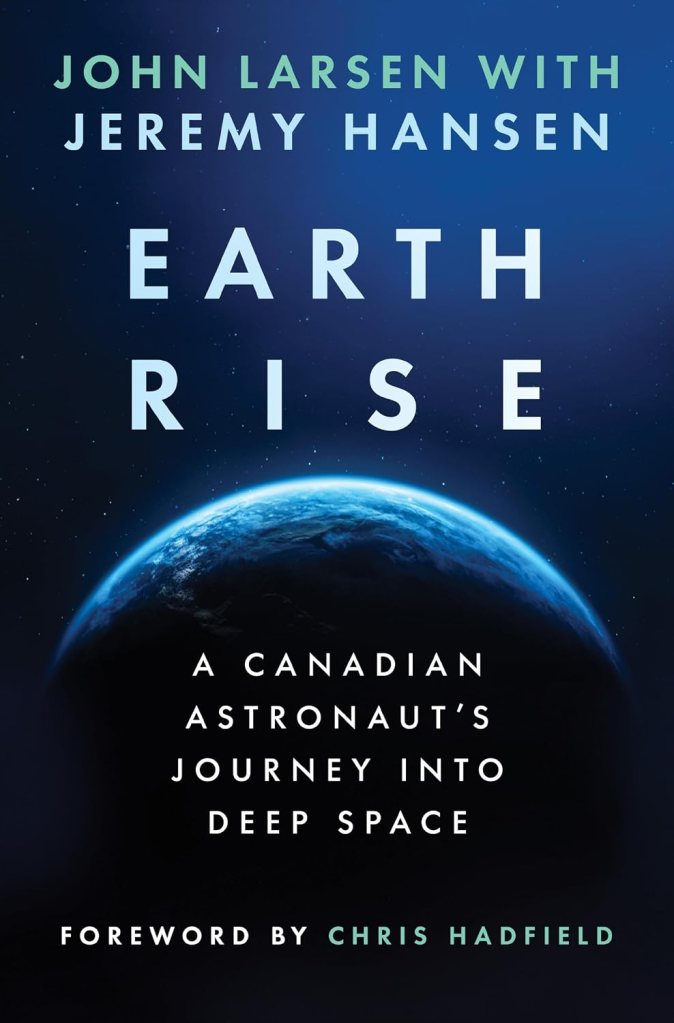
Earthrise: A Canadian Astronaut’s Journey Into Deep Space
We independently select everything we recommend. Buying through us may earn us a commission, which supports our work. Prices and availability are subject to change after publication.
TBS: Why do you think this story matters now?
JL: It arrives at an important moment. Canadians should feel proud of the role this country has played in space exploration and scientific achievement. The book is a reminder of what Canadians have accomplished and what we can achieve when we aim high.
TBS: What was it like working with Jeremy Hansen on the book?
JL: I didn’t know Jeremy before we started the project. He was incredibly generous with his time, his experiences and his trust. I couldn’t have written the book without him. More than half of the book is told in his voice, which helped bring authenticity and a personal perspective to the story.
TBS: Did the project affect you personally?
JL: Absolutely. I spent time with Jeremy, his family and the people closest to him. By the end of the process, I felt deeply connected to the story. When I submitted the first draft, it was an emotional experience because I knew how much these events and relationships meant to everyone involved.
TBS: If you had to describe the book to readers in one sentence, what would you say?
JL: It’s an adventure story about humanity, achievement and Canada’s contribution to exploring space, yesterday, now and into the future.